Seeder - Minecraft seed map, finder & explorer
Search and analyze any Minecraft seed. Discover biomes and structures, find seeds with the biomes you want. All in your browser!
Open a random seedor explore your own seed:
Tip: in a world you already play, type /seed in the chat to get its seed.
Seeder: 1.0.0 · Works up to Minecraft: 26.3
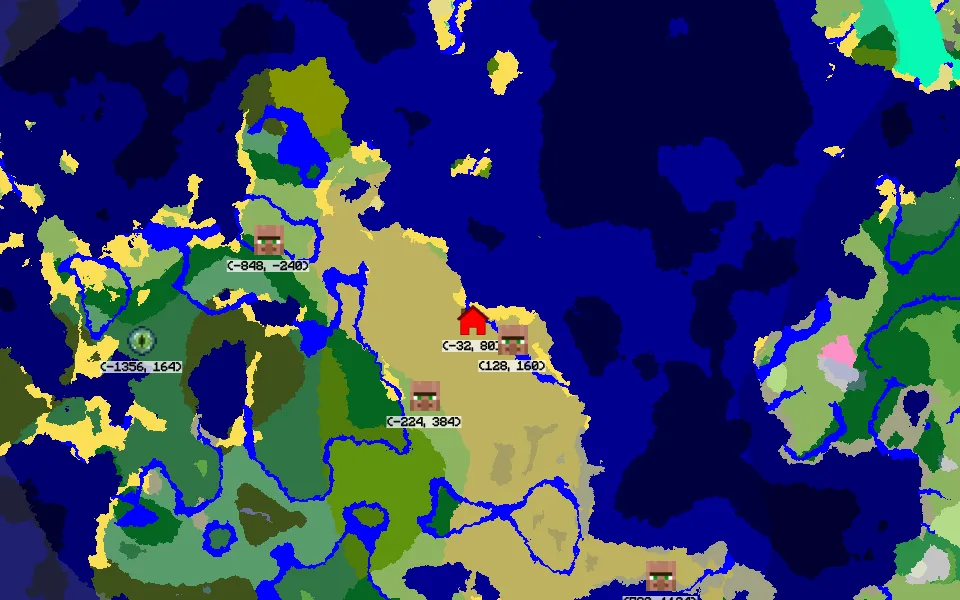
Seed map
Open a seed on an interactive biome map. Find spawn, strongholds and structures. In the Overworld, the Nether and the End. At any height.
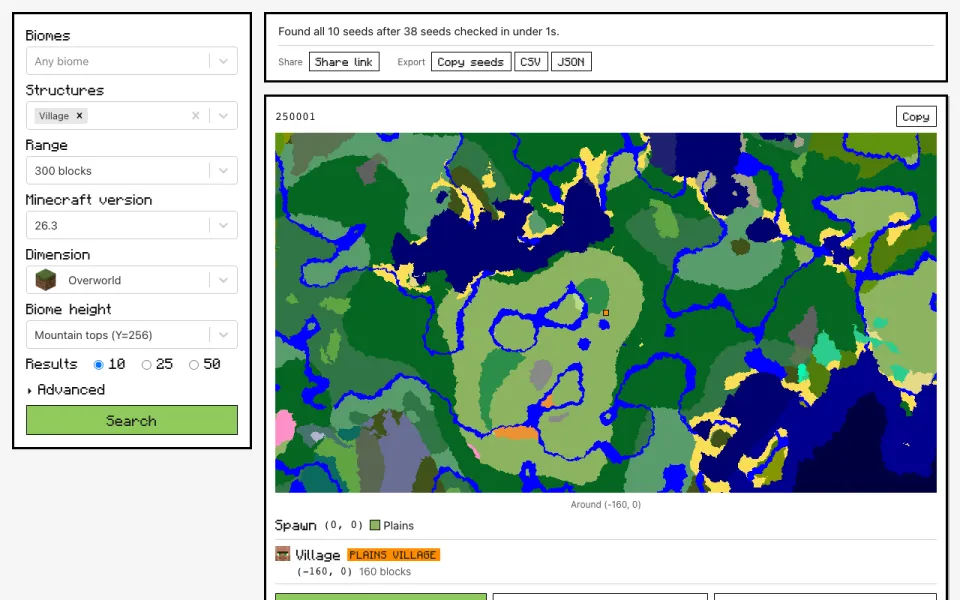
Advanced finder
Describe the world you want, with biomes and structures near the world centre, and get a list of seeds that match. Open, save and share them.
FAQ
What is a Minecraft seed?
A seed is the number Minecraft starts from when it generates a world: the same seed on the same version always gives the same terrain, biomes and structures. You can type one when you create a world, as a number or as text, which the game turns into a number (Seeder does the same). In a world you already play, the /seed command shows it.
Does Seeder work for Bedrock Edition?
For biomes, yes. Seeder reproduces Java Edition's world generation, and from 1.18 a seed gives the same terrain and biomes on Bedrock, so the biome map works for Bedrock worlds too. Structures, strongholds and slime chunks are placed differently on Bedrock, so those markers only hold for Java.
Where does Seeder run?
In your browser. The world generation comes from cubiomes, a C library compiled to WebAssembly, and runs on every core of your device. Nothing you type is uploaded! Searches use a lot of CPU, so your device may slow down while one runs.
Which Minecraft versions are supported?
Java Edition from Beta 1.7 to 26.3. Pick the version your world was created with: world generation changes between versions, so the same seed can look different on another one.
Why are biome searches slow on 1.18 and later?
Since 1.18, Minecraft builds biomes from 3-D noise instead of the old 2-D layers, which makes checking a seed for a biome about a hundred times more expensive: within 300 blocks, one core checks about a dozen seeds per second. Keep the biome range small, or better, add a structure: only seeds that already have it get their biomes checked.
Can I trust Seeder? Who pays for it?
Nothing leaves your browser! Google Analytics counts visits and Google AdSense shows ads, but that's it, everything else is done in your browser. Donations through the buttons at the bottom of the page help pay for it, and the About page tells the rest.
Support Seeder!
Seeder is free, paid for by ads and by donations: the PayPal and Buy Me a Coffee buttons are at the bottom of every page. The code is open source on GitHub.